
I went from marketer to iOS developer to VP of Mobile and Design, and never stopped building.
From 2011 to 2021 I put a state senate campaign's ads in front of 208,000 targeted people, shipped two iOS apps in one year, led the bilingual team that set up an official sister-state relationship between Utah and Qinghai, and taught UX students who went on to Amazon, Microsoft and Shopify. Each job added a new way to ship. None of them took the building away. Here's how it went, and what each step taught me.
Ten years, five kinds of job, and I shipped in every one.
I've been the marketer, the developer, the designer, the manager and the teacher. Marketing taught me to find out fast if anyone cares. Code taught me to get software in front of real people. Teaching taught me to write down what good looks like, then score it.
I started in marketing, where you find out fast if anyone cares.
Before I wrote any code, I sold ideas. In 2014 I ran digital marketing for a state senate campaign and put 2.5 million ad impressions in front of a targeted 208,000 people in three months, at minimal cost. That same year I founded Music Heals Movement, which grew to 30,000 followers in months.
Marketing came first, and I never dropped it. I've written launches and run growth at most of my jobs since.
Then I learned to code, and shipped before sunrise.
In 2015 I went through DevMountain to learn iOS development, and shipped two apps to the App Store that year. One was a tool for brain-injury rehabilitation.
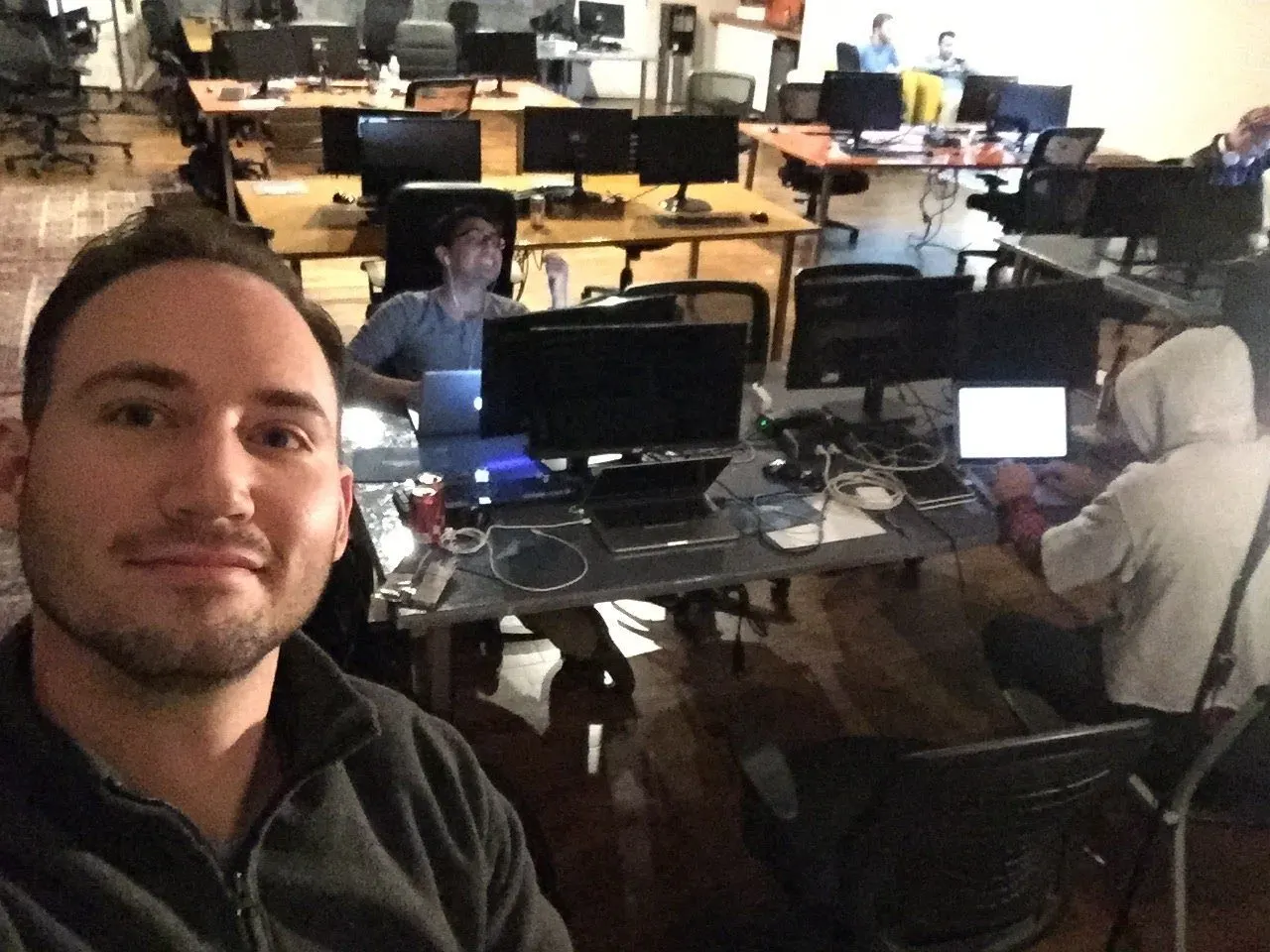
The photo below is from a late-night hackathon, when I was working as an iOS developer. Laptops open, cords everywhere, a can of soda on the table. An app came out of it and went to the App Store. Getting software in front of real people became the job. It still is.
At Flying Software Labs, I went from writing the app to running the team.
I joined in 2015 as an iOS developer and became VP of Mobile and Design. Flight schools have a scheduling problem most software never sees. Booking one flight means checking flight hours, duty hours, certifications, aircraft hours, maintenance records and licenses.
I shipped two Swift apps for it, created the company's UI and UX function, and redesigned five aviation products across mobile and desktop.
- Offline iOS apps
- Flight schools could schedule and grade training flights with no connection.
- Scheduling
- A calendar with backup events, and a stage-based flight workflow.
- Out on the ramp
- Airport task management and fuel truck tracking.
- The marketing site
- I rebuilt it and its conversion funnel. The old job came in handy.
- China
- I led the company's entry into the market.
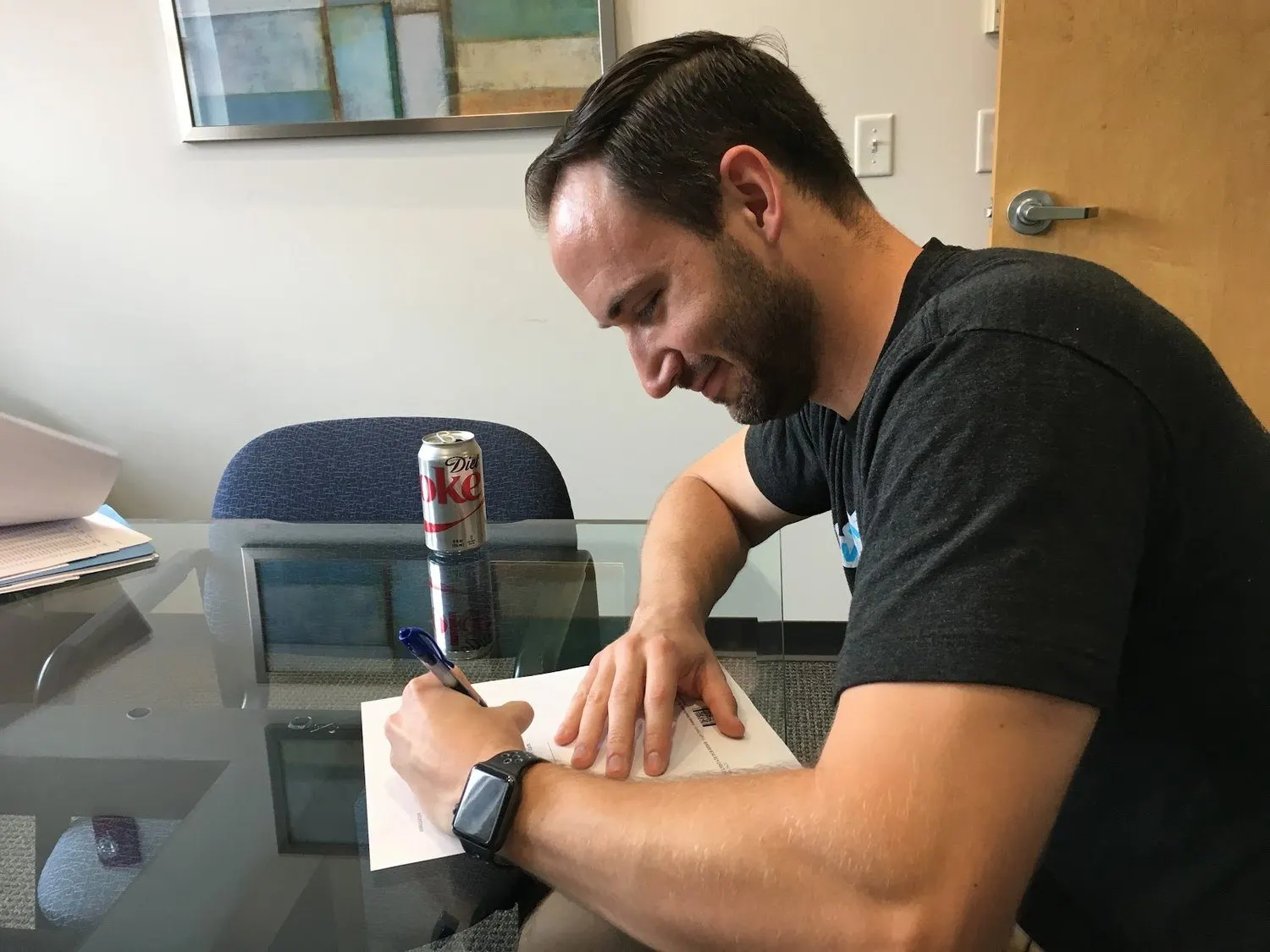
In fluent Mandarin, I led a bilingual team that linked Utah and Qinghai.
I became fluent in Mandarin over more than three years of study and work in Taiwan and China. From 2011 to 2019 I served on the board of the Utah-Qinghai Ecopartnership, which connected the State of Utah with Qinghai province.
I led a bilingual team of six across both governments to set up the official sister-state relationship. I also secured a first-of-its-kind ¥2M grant from Qinghai Province by managing technology transfer across companies and universities. In November 2016, I sat at this table signing partnership agreements between the two.
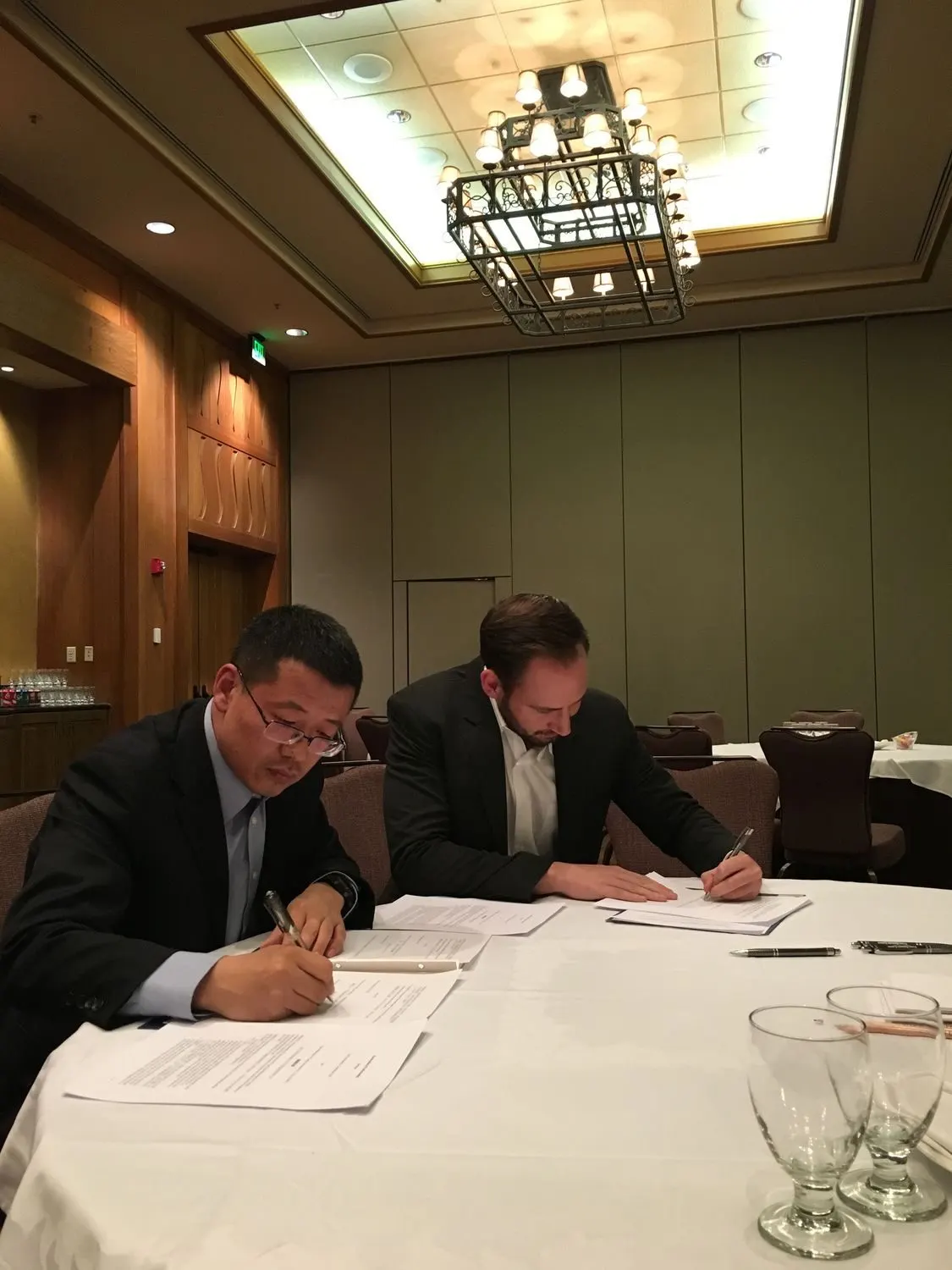
8 companies. 8 universities. 1 state. 1 province. Two languages.
It keeps coming up. I've sat across the table from manufacturers in China, and I've researched SchoolAI in Mandarin, in a real school.
At Lambda School, the product was people.
I joined in 2019 as UX Manager. We put it plainly: our product is our students, and UX hiring managers are the customers. Students started from zero and had months to get ready for their first product team.
The wall in those first weeks said what mattered: projects good enough to impress hiring managers, projects deployed to real users, and students who thrive until the day they get hired.
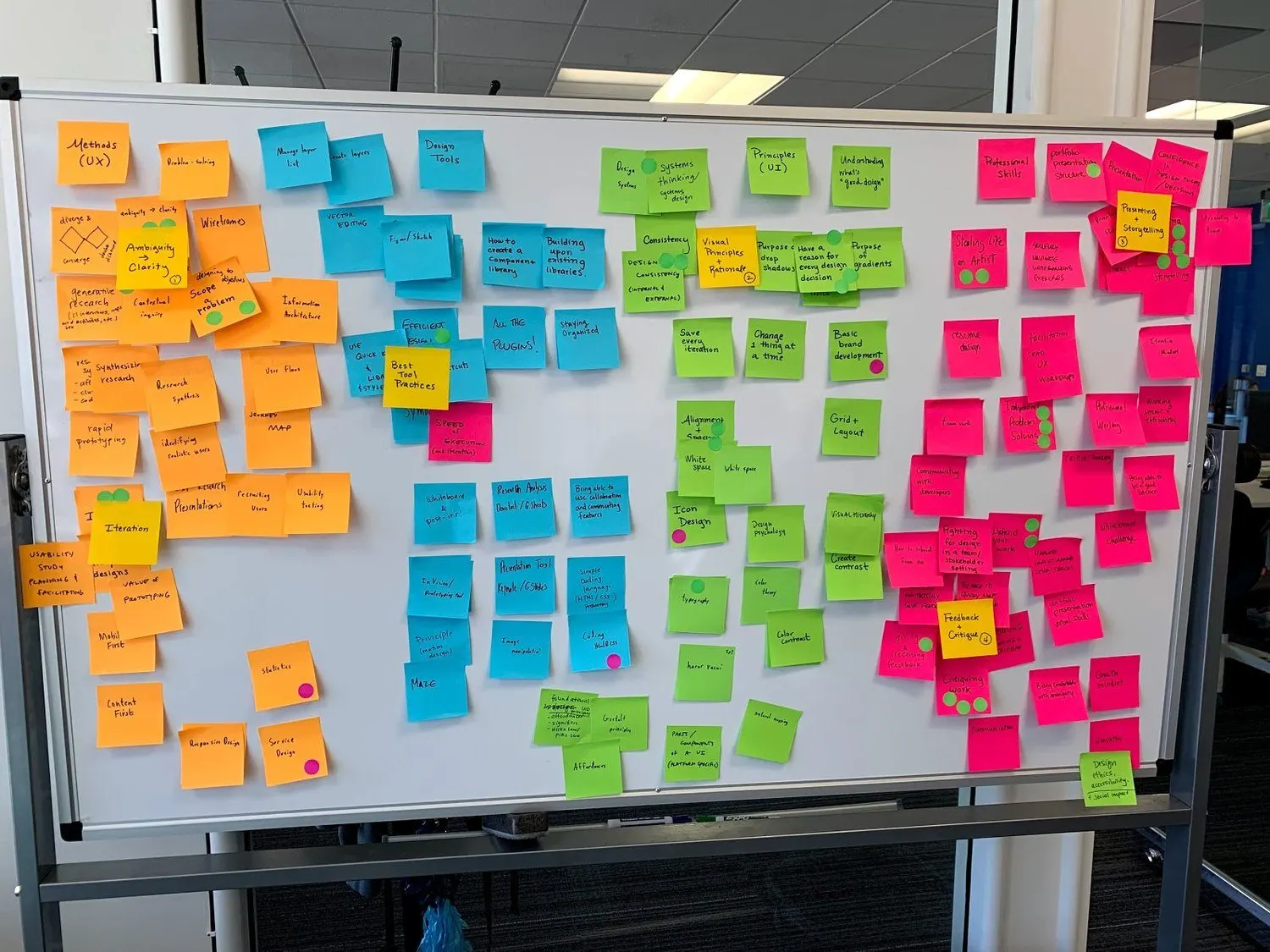
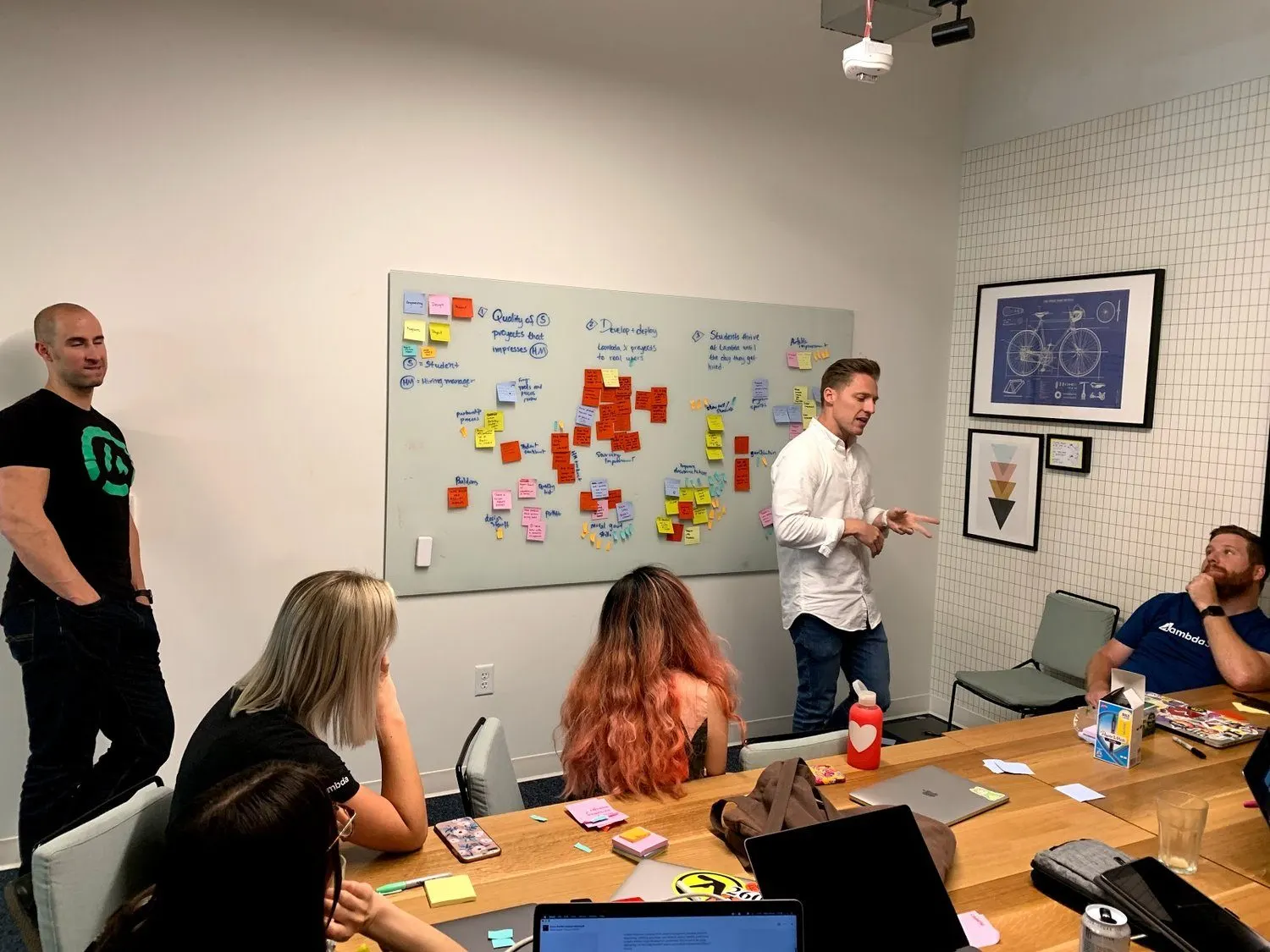
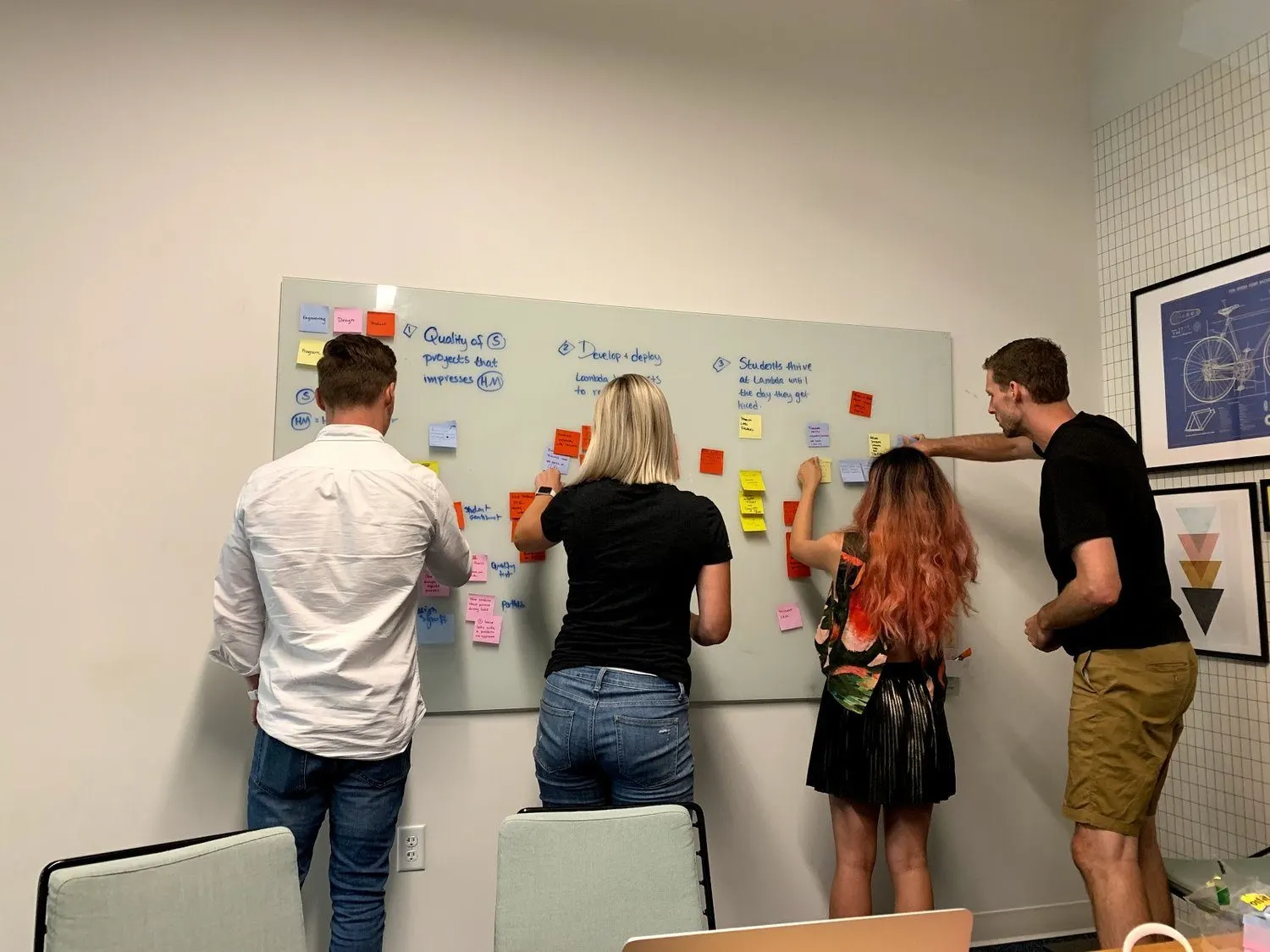
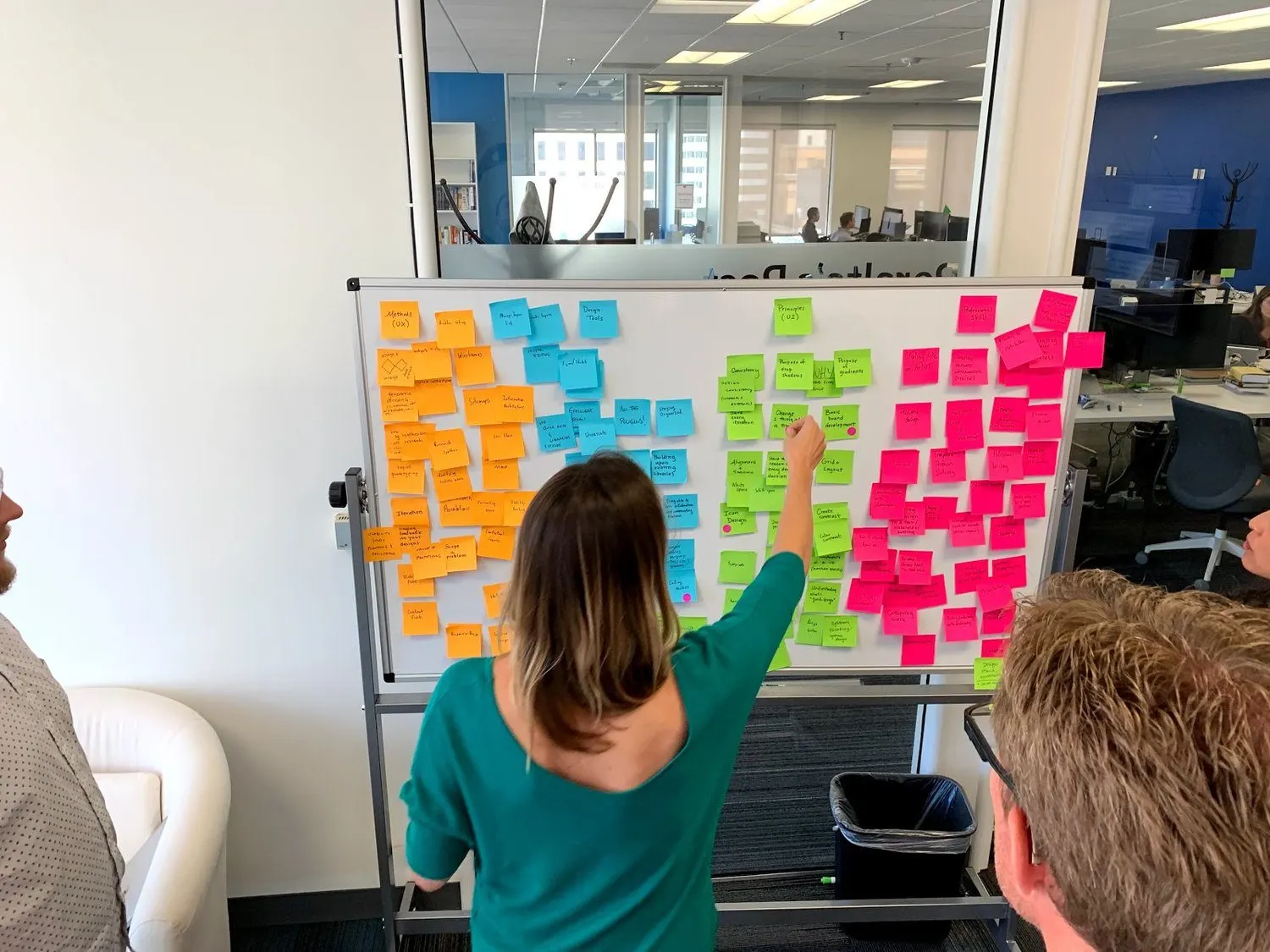
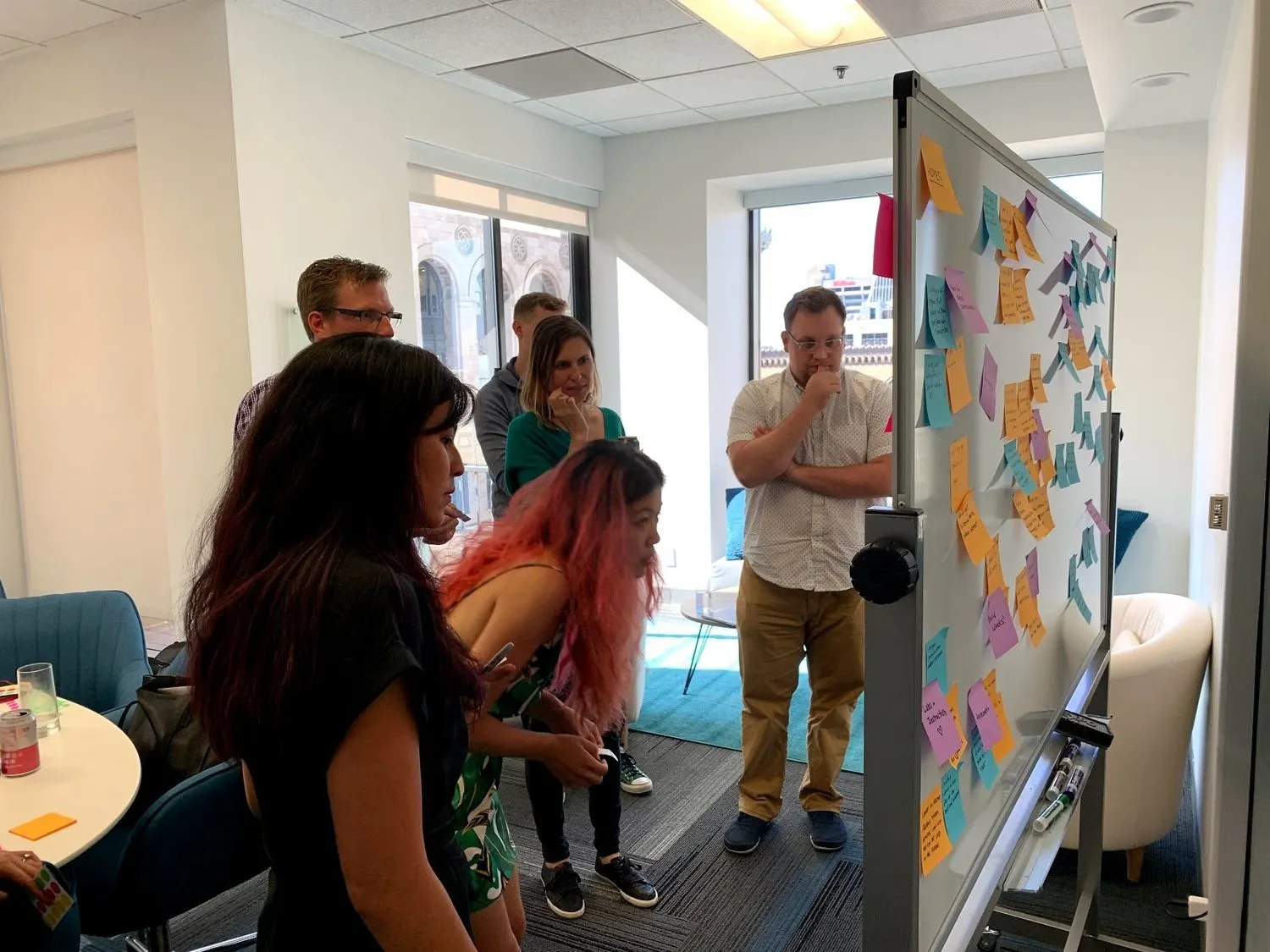
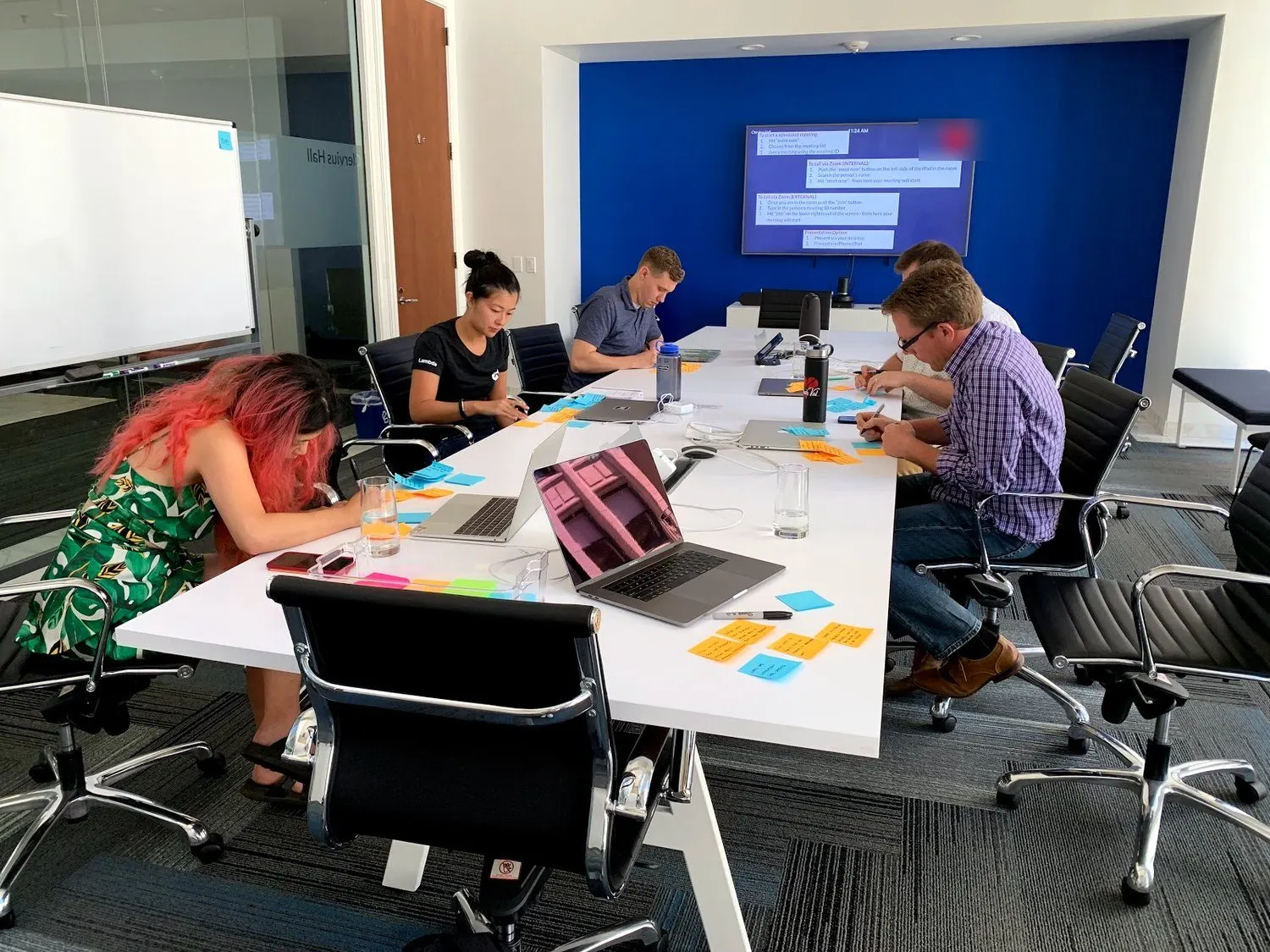
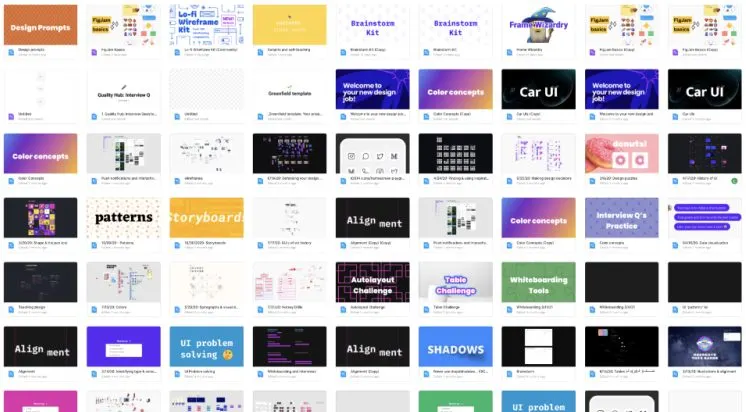
The first weeks at Lambda: sorting UX skills under three goals on the wall, then the lessons we built in Figma.
- Defining the hiring bar
- We surveyed design leaders, then brought UX directors and managers on-site to review real junior portfolios while we watched what they chose. It was the most important research we ever did.
- Measuring something subjective
- Visual design and usability rubrics, with each attribute scored 1 to 7 every sprint and 4 as passing. That told us whether the teaching worked.
- Live, remote, all at once
- Zoom, Figma and Slack together. Seeing 20+ people work on the same screen at once never got old.
- Feedback for one person
- A private Notion doc per student, with checklists and Loom videos.
- A curriculum that kept moving
- New lessons every week: autolayout challenges, brutalism, a virtual tour of a Tesla. The hardest ones were the best. Frustration usually turned into real pride.
- Where they landed
- By 2021 my students were working at Amazon, Microsoft, Shopify, Oracle and T-Mobile. Our top student started in a senior role at $156,000.
It adds up to an executive who still builds.
I've been the marketer, the developer, the designer, the manager and the teacher. When I run a team now, I know what each of those jobs feels like at 4:23 a.m.
The rubrics came with me too. I test AI products the same way today: write down what good looks like, then score every run. That's how someone ends up an executive who still builds. I never found a good reason to stop.
Looking for someone who leads and still builds?
Tell me what you're working on.
Start a conversation